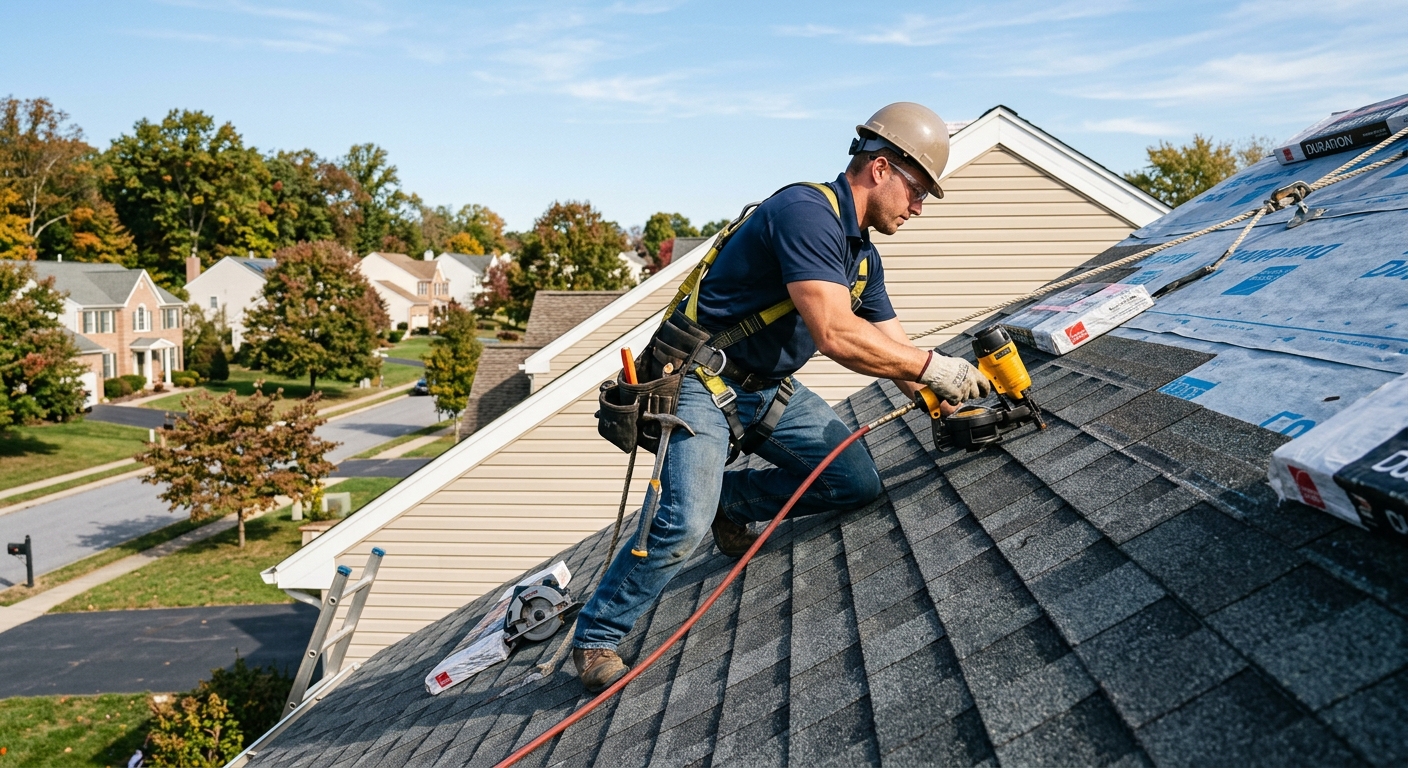
What roof replacement costs in Norristown in 2026
Norristown’s roofing market is shaped by a housing stock where over 80% of homes predate 1980 (U.S. Census Bureau, ACS 2024) and fewer than 13% are single-family houses. This mix favors smaller-scale projects but also means you’re likely dealing with older roof decks and past repairs that affect project cost. Many of these roofs have outlived original materials and repairs, leading to scope surprises once shingles come off. With a homeownership rate below 40% here, budgets drive decision-making more than in wealthier, owner-heavy suburbs.
Post‑World War II tract housing in Abington and Cheltenham set the installation pattern for the whole area: most Norristown jobs are asphalt shingle tear-offs, not repairs or overlays. These homes typically have moderate-pitch roofs, little architectural complexity, and standardized lot sizes, which keeps most re-roof jobs straightforward but forces close attention to underlying woodwork given the age. It’s rare to see true custom roof architecture, but it’s common for a flat rear addition or porch to require a membrane, because shingles simply won’t last at low slope. Insurance companies know these local conditions well, and adjust claims and premiums accordingly.
| Material / Scope |
Lifespan |
Best for |
Price range (installed) |
| Asphalt shingles — architectural (30-yr) |
25–30 yrs |
Most Norristown and Montgomery Co. tract homes |
$9,900–$21,000 |
| Asphalt shingles — impact-resistant (Class 4) |
30+ yrs |
Homes near Schuylkill River valley, wind exposure |
$16,000–$21,000 |
| Metal standing seam |
40–70 yrs |
Long-term upgrade, larger homes, HOA-approved replacements |
$24,000–$42,500 |
| Flat roof — TPO or EPDM |
15–25 yrs |
Porches, additions, rowhome rear sections |
$12,500–$25,000 |
| Roof repair — leak or isolated section |
n/a |
Targeted spots, storm or wind patching |
$500–$2,000 |
Prices are estimates for a typical Norristown home and vary with roof size, pitch, decking condition and material selection.
Timing a roof replacement in Norristown
Roofing in Norristown follows a seasonal rhythm dictated by both climate and a crowded contractor market. April to June is prime replacement season here, as daytime temperatures (usually above 50°F) allow new asphalt shingles to seal properly without constant risk of cold-snapping. By late June through early September, business is brisk, but roofs still go on straight, since humid Pennsylvania summers permit good sealing. However, the Philadelphia metro is saturated with roofing crews, and prime spots get booked fast—if you call in April, your job could be scheduled as far out as late July.
Late summer storms can lead to sudden surges in emergency calls. Expect the largest backlog right after a significant thunderstorm, especially with Norristown’s exposure along the Schuylkill River valley. When winter comes, especially after December, you’re up against cold snaps and frost. Emergencies in January or February get costlier—crews work slower, labor costs rise, and temporary solutions (like tarping or patching) are often baked into the price. Plan your replacement for September or early October: crews are past the summer peak, the weather is still shingle‑friendly, and you’ll avoid the winter premium. If your roof isn’t actively leaking or showing obvious failure, waiting for spring or fall will save you hassle and sometimes a few dollars.
How southeastern Pennsylvania's weather shapes roofing here
Montgomery County’s proximity to the Schuylkill River valley means Norristown roofs face higher risk from thunderstorm winds than homes just a few miles inland. A sudden microburst here can rip tabs from older asphalt shingles, resulting in leaks that cost upwards of $500–$2,000 to patch. It’s not rare for poorly-sealed ridge lines or loose flashing to fail when coastal storm remnants roll through.
The regional ground snow load sits at 30 psf in southeastern Pennsylvania—enough to stress older roof decks but not in the “snow belt” league found north of here. Most Norristown roofs don’t need extra rafter beefing, but water infiltration is a deeper worry. Our winter design temp is 14 °F; gutters regularly freeze, and warm attic air melts snow above, refreezing at the cold eaves. That leads to ice damming—water backs up under shingles and finds any weak spot. A single freeze-thaw cycle can force water beneath a poorly-set shingle, delaminating the roof deck and turning a minor drip into a repair costing $1,250 or more. Hail isn’t the main concern here—most storms bring wind and rain, not Oklahoma-style, golf-ball hits—but hail can still bruise a shingle, shortening its lifespan even when there’s no obvious hole.
Local carriers are quick to deny claims for improper installation or skipped ice barrier, which some parts of Montgomery County still see in homes built before underlayment codes. That leads to out-of-pocket repairs, another argument for a code-compliant install.
Pennsylvania code and Montgomery County permit rules for roofing
Montgomery County, including Norristown, enforces the Pennsylvania Uniform Construction Code (UCC), which is based on the International Residential Code (IRC). Roof replacements covering more than 25% of a roof’s surface require a building permit in Norristown; small repairs under that threshold generally do not, though townships like Lower Merion allow even more leeway for minor repairs below one roofing square.
Permits in Norristown are issued by the Municipality of Norristown Codes Department. If your township is outside the borough, each operates its own code enforcement office. Contractors are required to hold a Home Improvement Contractor (HIC) registration—mandatory for any contract over $500. Homeowners should verify HIC registration status at hic.attorneygeneral.gov, and confirm workers’ compensation insurance through the WCAIS system at wcais.pa.gov. Pennsylvania law also requires a written contract for any roofing job above $500, and you have three business days to cancel the contract if you change your mind. Waiving or rebating insurance deductibles is not allowed under the law. For older homes (pre-1978), ensure the contractor follows the federal EPA Lead RRP Rule, verifiable at certifiedrenovatorsearch.epa.gov.
Flat roof sections: the part most quotes get wrong
Many Norristown homes—whether older rowhouses or postwar frame houses—include flat roof sections on porches, rear additions, or garages. Standard architectural shingles work on the main roof because of their pitch, but put them on a flat or low-slope section and you’ll see leaks within a couple years. Water sits, rather than drains, so seams and nails become weak points that let water in during storms or winter thaws. It’s not just about the shingle warranty; building code in Pennsylvania expects a continuous, sealed membrane on anything below a 2/12 pitch—usually TPO or EPDM rubber.
A proper flat roof membrane holds up 15–25 years with little trouble, and the cost in Norristown is $12,500–$25,000 for a full tear-off and replacement, sized for single-family additions or rowhome footprints. If your roofer quotes shingles for a 2/12 pitch and doesn’t mention seams, drainage scuppers, or membrane options, they’re showing either inexperience or disregard for Montgomery County’s codes and realities. Down the line, this shortcut will always cost you more in callbacks, rot, and interior repairs.
Reading the warranty on a Norristown roof
Every roof in Norristown comes with two warranties—whether the contractor explains the difference or not. The first is the manufacturer’s warranty, which covers shingle or membrane material defects. This warranty is almost always prorated after the first decade, often requires online registration within 60–90 days, and becomes void if the roof was layered (installing new shingles over old), if proper ventilation was skipped, or if the installer didn’t follow manufacturer spec. Material warranties sometimes transfer to the next homeowner—but only if you complete their paperwork on time, and sometimes with a service fee.
The other is a workmanship warranty from the roofing company, covering labor or leaks resulting from installation shortcut or error, usually for 5–10 years. Big companies may advertise 25-year workmanship coverage—but a 25-year warranty from a new two-year-old company in Norristown is only worth what the company’s future is. A decade from a crew that’s been here through a few local storm seasons means more. Always ask what voids the warranty, and get every detail in writing before work starts. At resale, proper documentation of both warranties can smooth deals and catch buyer eyes in Montgomery County’s competitive housing market.
Roof age and construction era in Norristown
In Norristown, over 80% of the homes were built before 1980 (U.S. Census Bureau, ACS 2024), reflecting the construction waves that swept through Montgomery County after World War II. That era’s typical roof pitch—a moderate slope, not steep colonial—means most houses use asphalt shingles and have wood decking that ranges from wider cedar planks to the first generations of 3/8" plywood. Full ice barrier underlayment wasn’t required by code until more recent decades, so roofs from this time often have gaps in modern water protection at the eaves.
Many homes have seen two or three shingle layers because overlays were once commonplace as a “budget fix,” but modern code in Norristown (and most of Montgomery County) requires complete tear-off if replacing more than 25% of the roof. This often uncovers hidden deck rot, previously overlooked flashing errors, or bad nailing from prior rushed jobs—as local buyers and inspectors know. Expect surprises if your last “roof replacement” was just a shingle over; plan your budget with at least some wood decking repair figured in.
If you’re in a mid-1980s or newer development, you may be seeing the roof’s first required replacement now. Those tracts use OSB or thinner plywood decking, and benefit from factory-laminated shingles, but corners cut on ventilation or flashing can still make the first big tear-off trickier and push into the higher end of the cost bands.
Frequently asked questions — roofing in Norristown
What causes ice dams on Norristown roofs?
Ice dams form when warm air escapes from your attic and melts snow higher up the roof, even while the eaves stay below freezing thanks to our 14 °F winter design temperatures. Meltwater runs downward, then refreezes right at the gutter line. This buildup of ice traps more water, forcing it back up under the shingles and onto the wood deck. Older Norristown homes—over 80% are pre-1980—tend to have weaker insulation and ventilation, which amplifies this effect. Once water seeps under the shingle, it can delaminate plywood and cause leaks that require repairs often costing $500–$2,000. Preventing ice dams means proper ventilation, attic air-sealing, and, in many cases, the right ice barrier underlayment at the eaves during re-roofing.
Is ice barrier underlayment required in Norristown?
Ice barrier underlayment is required by the Pennsylvania Uniform Construction Code (UCC), which applies across Montgomery County, including Norristown. This means at least one layer of self-adhering membrane (often called “ice and water shield”) needs to be installed along the eaves—usually covering from the gutter edge up past the interior wall. Many older homes built before modern codes won’t have it unless the roof was replaced after the UCC was enforced. Lacking this critical underlayment can void both workmanship and manufacturer warranties for new shingles and can lead to water intrusion during freeze-thaw cycles. Retrofits during a typical roof replacement, priced between $9,900–$21,000, should include updated ice barrier in all bid details.
What happens if it rains mid-replacement?
During a roof replacement in Norristown, local contractors know sudden weather shifts are common, especially with the area’s exposure to thunderstorm remnants. If rain starts mid-job, crews should immediately cover open sections with heavy-duty tarps and synthetic underlayment to prevent water intrusion. Good outfits plan for this, working in smaller, rapidly-finished sections rather than tearing off the entire roof at once. Any water that reaches the decking or gets inside walls may require additional repairs—and you could see your replacement price (normally $16,000) rise unexpectedly if the crew doesn’t act fast. When hiring, ask them about their rain contingency plan, and always check for recent local reviews.
What if my insurer denies my roof claim?
If your insurance claim is denied—something Norristown homeowners see after wind and storm damage if the roof was old or wear-related—you’re left with the full replacement or repair cost out-of-pocket. Insurers are especially strict if the roof has more than two shingle layers, pre-existing leaks, or missing documentation about proper permits and code compliance. For a full replacement, expect to pay $9,900–$21,000 if you want the job done correctly to present standards. If you only need an isolated repair, that will usually fall between $500–$2,000. It’s worth getting a detailed inspection report to show what’s storm-related versus ongoing neglect before appealing the denial or proceeding with self-pay work.
How can I tell if my roof decking is rotted?
In Norristown’s older homes, rot often hides beneath layers of shingles or patch repairs and isn’t visible from the ground. Signs inside include stained ceiling drywall, peeling paint near the top of walls, or a persistent musty smell after storms. If you can safely get into the attic, press lightly on the underside of the roof—soft spots, mold, or chunks of missing wood show trouble. On the roof, sponginess under foot or fasteners pulling through the shingle surface are red flags. Most reputable contractors will replace rotted decking during full roof replacement—already figured into a price band of $9,900–$21,000—so you shouldn’t need a separate job or crew if it’s caught then. Always ask your roofer to take photos of decking before nailing down new material.
How much deposit should I pay a roofer upfront?
Pennsylvania law (via the Home Improvement Consumer Protection Act) limits up-front deposits to no more than one third of the contract price before any work starts, so a typical Norristown roof replacement at $16,000 should require no more than about $5,300 to schedule the job. Some local contractors may accept even less down, especially for repairs. Never pay the entire cost before work begins, and avoid paying in all cash. A legitimate contractor will give you a proper written contract, proof of HIC registration, and a firm start date. If you’re uncomfortable with the deposit amount or payment terms, shop around—Montgomery County’s saturated roofing market gives you options.
How much does it cost to repair a roof leak in Norristown?
Roof leak repairs in Norristown tend to fall in the $500–$2,000 price range for an isolated section—think a small valley, flashing, or around a vent stack. The final cost depends on accessibility, extent of wood rot, and whether steep or flat roof systems are involved. Expect higher costs if the leak’s been lingering, soaking into decking or insulation. If more than one section is failing or decking repairs are needed, full replacement may end up being more cost effective, since patching becomes a revolving door of expense on aged, layered roofs. Always get a clear written estimate with photos of the damage before greenlighting repair work.
How long do architectural shingles last compared to 3-tab?
Architectural (laminated) shingles, now the standard in Norristown and Montgomery County tract housing, typically last 25–30 years—with good ventilation and underlayment. Basic 3-tab shingles rarely see more than 18–22 years in this climate, especially with freeze-thaw and thunderstorm wind exposure. You’ll pay a little more upfront—$9,900–$21,000 compared to slightly cheaper materials—but the extra lifespan means fewer repairs and less risk of water damage over the decades. Most roofers here recommend architectural as a baseline, not an upgrade, since most homes require a tear-off and new code-compliant install anyway.
Is a metal roof worth the extra cost in Norristown?
Metal standing seam roofs come with a steep upfront investment—expect $24,000–$42,500 installed in Norristown. But they offer 40–70 years of service life, so a homeowner planning to stay for decades (or maximize resale in a gentrifying area) can justify it. Metal shrugs off thunderstorm winds along the Schuylkill River valley better than shingles and sheds snow more efficiently after winter storms. That makes leaks and ice damming less likely, though details like flashing and fastener type still matter. For most Norristown single-family homes, asphalt architectural shingles remain the best balance of price and reliability, but the prestige and endurance of metal will appeal to those with larger homes or long-term plans. Always ensure HOA approval and a documented panel brand before signing a metal contract.