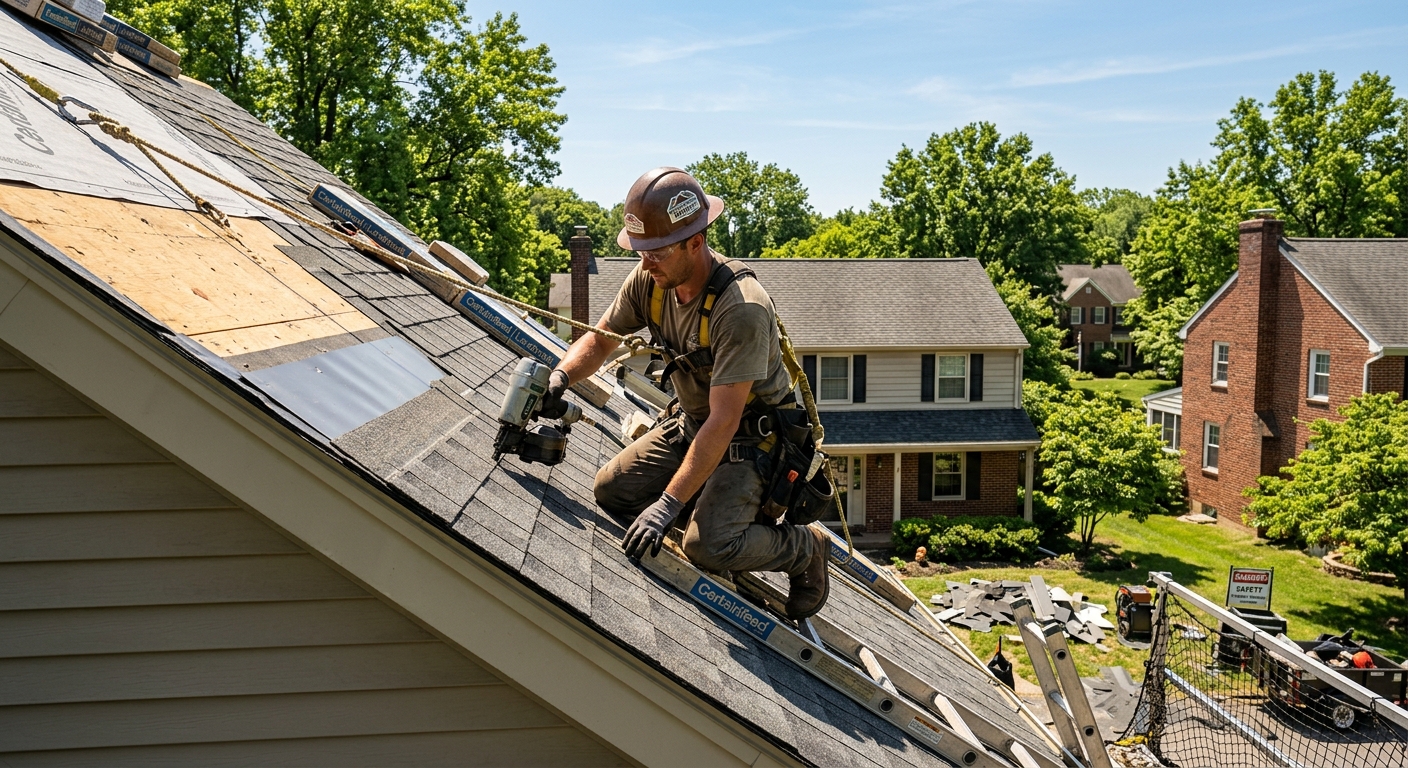
Roofing Replacement & Repair costs in West Earl — 2026
Roofing work in West Earl needs a local context, especially with a homeownership rate over 78% and single-family homes the overwhelming majority (U.S. Census Bureau, ACS 2024). Most roof projects here involve individual homeowners rather than rental or multi-family investors, affecting both material choices and how contractors schedule jobs. What also stands out is the high proportion of homes built before 1980. This housing stock means many roofs have seen multiple generations of shingles — and it’s not unusual for crews to find three or more layers stacked atop original steep-pitched frames.
Replacing a roof on a century-old West Earl house almost never matches up with the process on newer tract homes. Decking can be original wide-plank rather than plywood, and every extra shingle layer takes more labor (and dump fees) to remove. Permits are rarely triggered for minor repairs but are required when you’re stripping back to rotted sheathing or rebuilding structure. Local Amish and Mennonite roofing crews keep asphalt shingle prices competitive, but the dense competition here can swing quotes by thousands—depending on who gets up the ladder first and on what gets found under the old layers.
| Material / Scope |
Lifespan |
Best for |
Price range (installed) |
| Asphalt shingles — architectural (30-yr) |
25–30 yrs |
Most West Earl homes |
$9,900–$21,000 |
| Asphalt shingles — impact-resistant (Class 4) |
30+ yrs |
Homes exposed to storm winds |
$16,000–$21,000 |
| Metal standing seam |
40–70 yrs |
Farmhouses, low-maintenance |
$24,000–$42,500 |
| Flat roof — TPO or EPDM |
15–25 yrs |
Low-slope additions & garages |
$12,500–$25,000 |
| Roof repair — leak or isolated section |
n/a |
Spot fixes, small leaks |
$500–$1,950 |
Prices are estimates for a typical West Earl home and vary with roof size, pitch, decking condition and material selection.
What gets discovered after tear-off in West Earl
When a crew removes old shingles on a West Earl home—especially one that’s decades old—there’s a high chance of finding rotted decking. Years of leaks or ice damming from our winter freeze-thaw cycles (30 inches frost depth, 30 psf ground snow load) can turn roof boards soft to the touch. If the decking needs replacement, expect to add $850–$2,000 to your invoice depending on square footage. Under-vented attics are another recurring issue in older Lancaster County homes. In this climate, inadequate ventilation doesn’t just mean a hot attic in July; it can trap winter moisture, fueling ice dams that force water under shingles and destroy roof edges. Upgrading or adding a ridge vent and intake vent averages $600–$1,600.
Flashing work is another common scope change. Many older roofs have makeshift flashing at chimneys and walls—if that steel or aluminum was never properly lapped and sealed, leaks form and the cost to replace or repair flashing runs from $350–$900 per chimney or wall section. Rubber pipe boots and deteriorated drip edge also go missed until tear-off, adding $200–$750 to replace properly. Every extra item discovered mid-job adds real cost, so a thorough inspection and a contract that spells out unit pricing help avoid surprises at the end.
West Earl homes and their roof lines
With more than 40% of West Earl homes built before 1980 (U.S. Census Bureau, ACS 2024), the area’s roofs show off features of earlier construction periods: steeper pitches and long, uninterrupted gable runs typical of the era. Many older homes still have original wide-plank decking under layers of asphalt shingles. Where the original homes haven’t been totally gutted, you’re likely to find plank rather than plywood or OSB, and sometimes a patchwork of all three. Ice barrier—now required under the Pennsylvania Uniform Construction Code (UCC) for eaves and valleys—was not code when much of West Earl was last re-roofed, so the underlayment situation is often outdated at best.
This combination of steep roofs, old decking, and multiple shingle layers pushes up both dumping and demo labor compared to typical “one-layer” jobs in post-1980 housing. It’s not uncommon to come across three generations of shingles stacked atop one another, which was standard practice decades ago. Modern shingles are meant for a flat, dry deck with a full ice barrier. Any present-day replacement needs to address these oversights from the start—layers and hidden leaks just get more expensive with time. For homeowners, understanding this history helps explain why full replacement is often unavoidable, and why qualified roofers in Lancaster County will always inspect what’s under the top layer before quoting a fixed price.
Water management on a West Earl roof
In West Earl, managing roof water isn’t just about preventing leaks—it’s about protecting your basement and siding, too. Gutters, downspouts, drip edge, and the grading around your home form a single system for moving melting snow and rainfall away from your house. When a new roof goes on and old, leaky gutters are left in place, water can overflow and pool at the foundation, raising the risk of basement dampness—an especially common issue with the older foundations prevalent in Lancaster County’s pre-1980 homes. Downspouts that dump too close to the house can reverse all the protection you just paid for up on the roof.
Modern shingle warranties often require a functioning gutter system and code-compliant drip edge to keep water out of wall cavities. Upgrading or replacing gutters alongside the roof typically costs $2,500–$4,900 for seamless aluminum with proper downspout extensions on a West Earl single-family home. It’s money well spent if you want your new roof (and basement) dry for the long run.
Roofing season and lead times in Lancaster County
In Lancaster County, the practical roofing season starts in late March and runs through early November. Our coldest months—December through February—often have too many freeze-thaw cycles and low winter design temps (as low as 12 °F) for proper shingle sealing. Crews avoid starting projects when nighttime lows stay below 40 °F, so emergency repairs and leak work in February cost more—sometimes adding a 15–20% premium compared to mild-weather months.
The Lancaster–York–Harrisburg metro is a saturated contractor market, especially in and around Lancaster city, so West Earl homeowners face two realities: plenty of choices in the spring rush, but also good roofers with booked-out schedules for 4–6 weeks during peak months (May to October). Waiting for September or October can get you better pricing and scheduling flexibility, but waiting beyond November is a risk—one major leak during a cold snap becomes a true emergency. For the best blend of price and timing, book your job before late summer, and plan ahead for a spot if your roof is near its end-of-life.
Roofing permits in West Earl: what you need before work starts
Roofing projects in West Earl follow the Pennsylvania Uniform Construction Code (UCC), enforced at the municipal level. Most roof replacements—especially when new sheathing or any framing work is involved—require a building permit. But for minor leak repairs limited to swapping out a few shingles, most townships in Lancaster County (including West Earl) do not require a formal permit, keeping small fixes relatively simple compared to major tear-offs.
Homeowners should confirm that any contractor proposing work over $500 is registered with the Pennsylvania Office of Attorney General—this is required by law. To verify a contractor’s registration, check the official portal at hic.attorneygeneral.gov. Insurance is also mandatory. Confirm workers' compensation coverage by searching the contractor’s policy status in the state’s WCAIS system (wcais.pa.gov), as every Pennsylvania employer must carry coverage. Choosing a properly registered and insured roofer means any issues with workmanship, code compliance, or jobsite injuries won’t end up as your financial responsibility. Skip permit work or unregistered contractors and you risk headaches—especially with older West Earl homes that may uncover more repair needs once the job starts.
Patching vs full replacement in West Earl
The decision to patch or replace a roof in West Earl isn’t just about stopping the latest leak—it’s about the age and history of your home. In a township where much of the housing is pre-1980, many roofs are well past their first or even second layer, and spot repairs may only stretch out the inevitable. If your asphalt shingles are baked, curled, or showing missing granules after decades under Susquehanna Valley storms, then chasing leaks becomes a money pit. Two or three roof repairs at $1,250 each rapidly outpace the upfront cost of a full replacement, especially when you factor in unforeseen deck repairs often discovered only after tear-off.
For a roof under 15 years old with just one isolated leak, patching makes sense. But after 20–25 years—or if there are multiple leak points—the better long-term move is replacement. West Earl’s older, steep-pitched homes especially benefit from a total tear-off, which allows a proper inspection of decking and ventilation upgrades that are impossible with another repair job. If you find yourself returning year after year to patch new leaks, it’s time to pull the trigger on a full tear-off and rebuild.
| Situation |
Recommendation |
Typical cost |
Reasoning |
| Under 15 years, one isolated leak |
Repair |
$500–$1,950 |
Roofing materials still within expected lifespan, repair is cost-effective |
| 15–25 years, several leak points |
Replace |
$9,900–$21,000 |
Multiple repairs cost more in the long run; roof likely at end of life |
| 25+ years, any active leak |
Replace now |
$9,900–$21,000 |
Old roofs hide deeper issues, and patching gives only temporary relief |
| Storm damage, wind or hail |
Document, claim, replace |
$9,900–$21,000 |
Single-event damage is best handled by insurance and a new roof |
| Flat roof ponding or blistering |
Replace membrane |
$12,500–$25,000 |
Surface repair fails on deeper membrane failures; full replacement lasts |
| Active leak entering winter |
Emergency repair, schedule replacement |
$500–$1,950 |
Quick fix prevents immediate damage; full scope can wait for roofing season |
Frequently asked questions — roofing in West Earl
What should a roofing quote include in West Earl?
A thorough roofing quote in West Earl should address all the items that routinely turn into cost surprises on older homes: removal of all existing shingle layers, replacement of any rotted decking (wide-plank or plywood), new flashing at chimneys and walls, starter strip, drip edge, ridge and intake ventilation, full debris removal, and upgrades for building code compliance under the Pennsylvania Uniform Construction Code (UCC). For projects over $500, your quote should be a written contract per the Home Improvement Consumer Protection Act, with clear labor and material details, a copy of the contractor’s HIC registration, and their current workers’ compensation coverage. Even a basic tear-off and shingle installation will start near $9,900, but the best quotes show what is and is not included, including the costs to replace gutters ($2,500–$4,900 if needed), and spell out itemized pricing for any hidden repairs that turn up after tear-off.
How much does a flat roof replacement cost in West Earl?
In West Earl, most flat roofs use either EPDM rubber or TPO membrane—both suitable for low-slope additions and garages found on older homes in Lancaster County. Typical replacement for a standard single-family flat section, including tear-off, new membrane, and updated flashing, runs $12,500–$25,000. These numbers reflect local conditions: frequent freeze-thaw cycles and potential for ponding water, both of which bump up the labor and detail work compared to simpler steep-pitch jobs. If insulation needs upgrading or there are multiple layers to remove (common on older houses), expect to see numbers at the higher end of that range. As always, a careful pre-job inspection will pin down where your specific cost falls.
How do I file a storm damage roof claim in Pennsylvania?
After storm damage in West Earl or anywhere in Pennsylvania, start by documenting everything: take photos of damaged shingles, exposed decking, and any visible leaks—especially after the strong wind bursts we get along the Susquehanna River valley. Next, contact your homeowners’ insurance provider and file a claim. Many policies require you to take reasonable steps to prevent more damage, so emergency tarping (typically $500–$1,950) is usually covered. An insurance adjuster will want a repair or replacement quote from a contractor registered under the HIC program. For total roof loss, most shingle replacements are in the $9,900–$21,000 range, but your net cost depends on policy details and deductible. Never sign over insurance proceeds until you have all paperwork in hand from both the adjuster and your chosen contractor.
How much does a new roof cost in West Earl?
The cost for a new roof in West Earl spans $9,900–$21,000 for asphalt shingles—by far the most common choice on our local homes. These prices reflect not only labor and material, but the realities of multiple old layers and complicated rooflines dating to the county’s pre-1980 housing stock. If you’re eyeing a metal standing seam installation, expect to budget $24,000–$42,500. What pushes numbers higher are repairs to old decking, ventilation upgrades, or the need to bring underlayment up to the standards set by the Pennsylvania Uniform Construction Code. Small leak repairs or flashing fixes are at the lower end, from $500–$1,950, but plan for complete replacement if your home has the vintage West Earl roof most contractors expect to find.
How much snow load can a West Earl roof handle?
Roofs in West Earl are subject to a ground snow load requirement of 30 pounds per square foot (psf), as set for south-central Pennsylvania. This means roofs—especially on older homes—were built with joist and rafter spacing meant to support typical winter accumulation. However, if your roof is more than 50 years old or has been modified or weakened by leaks, it’s wise to have a contractor check the structure before adding new layers or switching to heavier roof materials. Also, packed snow and ice dams left unattended can exceed the design limits, especially on flatter sections. If an inspection after heavy storms shows sagging, prioritize repairs right away, which typically run $500–$1,950 before replacement becomes unavoidable.
How long do architectural shingles last compared to 3-tab?
Architectural asphalt shingles are now the standard in West Earl, lasting 25–30 years (or more for Class 4 options), compared to the old 3-tab style which rarely made it past 17–20 years under Lancaster County’s freeze-thaw cycling. Their heavier construction fares better against Susquehanna River valley thunderstorm winds and formed ice. For homeowners, that’s the difference between patching leaks every decade and seeing a roof outlast the next mortgage. The upgrade in cost is already factored into most replacement jobs here, with typical architectural shingle installs pricing at $9,900–$21,000, while 3-tabs—if you could still find them—would only save a few hundred dollars and be less durable in our local climate.
What does it mean if my shingles are curling or losing granules?
Curling or missing granules on your West Earl roof are classic red flags that the shingles have hit the end of their service life, especially in homes here with steep, older roofs exposed to repeat freeze-thaw cycles and summer hail bursts. Curling means water can travel under the shingle surface, potentially soaking the deck below. Loss of granules exposes the base asphalt to UV light, speeding its decay. If these signs are found across large roof sections, it’s time for replacement, not repair. Expect a full architectural shingle tear-off and replacement in the $9,900–$21,000 range—repairs become temporary at this stage, especially on the multi-layer roofs common in West Earl.
Can I install new shingles over old ones in Pennsylvania?
Technically, Pennsylvania’s Uniform Construction Code allows a second shingle layer in some residential cases, but it’s almost never the right call for a West Earl home. Most roofs here have already seen two or more previous overlays due to their pre-1980 vintage, and adding yet another layer may violate code if the roof already has two in place. Overlays don’t address hidden deck rot or proper ice barrier, and layered shingles rarely seal properly in our freeze-thaw climate. If you’re quoted an overlay for less than $9,900, you may only be buying short-term relief. Tear-off and full replacement is the only way to address all the underlying issues common to Lancaster County’s aging housing stock.
How far ahead should I book a roofer in West Earl?
In West Earl, good roofers can book up fast, especially in peak season from late spring through early fall. Because the Lancaster–York–Harrisburg region is so contractor-dense, you’ll find dozens of options, but the trustworthy, fully registered crews often run a backlog of 4–6 weeks in the May–October rush. Booking ahead by at least a month is wise if you want your pick of dates and crews. Emergencies (like a winter leak) do get quicker response, but you’ll pay an upcharge—emergency repairs typically run $500–$1,950 and can be hard to schedule during long cold stretches. For a full replacement in ideal weather, early summer or post-Labor Day tend to be the sweet spots for price and crew availability.